Smart game developers make a habit of giving away games to full-time streamers in the hopes that their audience will discover the game and in turn lead to sales. It would be fascinating to me to see some actual numbers on how that works out. In any case, it certainly seems to be working for me, as I have recently stumbled upon yet another enjoyable indie game known as Lethis - Path of Progress.
Lethis - Path of Progress is a city-builder along the lines of Caesar, Zeus, and Pharoah with a decidedly zany Victorian Steampunk setting. Like those games, your purpose is to grow a city from its humble roots to a thriving city. But unlike more traditional city-builders such as the Sim City franchise, in Lethis this process is much less about zoning and population growth and much more about carefully balancing a variety of services and ensuring that your citizens have access to the right resources at the right time. This is accomplished by what is generally referred to as the "walker" system, where each resource building spreads it services by means of a "walker" who will follow your transportation routes for only a limited distance before turning around.
While at first your population consists of migrants who are happy to settle without any infrastructure, they'll quickly begin to make demands for a particular service. Provide it, and their homes upgrade to a slightly higher density, allowing you to increase your workforce and tax base without having to build more homes. These progress from simple access to food and water to more exotic needs like an exorcist to chase off ghosts, copper utensils for proper dining, a theater for endless entertainment, and newspapers to keep up with everything that's fit to print in the empire. And then there are the bourgeois, who have their own set of demands, which mostly consist of a small army of automatons to cater to their every whim. While these rich folk don't actually provide any workers, they do generate considerably more taxes.
The game includes both a tutorial and sandbox mode, but the heart of the game is a series of 26 missions across three difficulty levels, each presenting you with a different mix of terrain and available services by which you must meet the victory conditions. There is thus quite a bit of gameplay for your money.
Overall Lethis Path of Progress has proven to be an enjoyable diversion. Both the art and the music are excellent. The game is also simple enough once you get the hang of it, but each scenario feels like a unique puzzle that you have to solve. The exact mechanics of some of the services, such as balancing the number of wheat farms to windmills to bakeries in order to provide bread for your population, are not clearly marked out for you, forcing you to experiment and innovate as you move through the scenarios. Making sure to keep all of your walkers moving in such a way as to cover all your population can be quite daunting at times, especially when a misstep along the way can cause all your buildings to revert to a less dense status when a service is no longer being delivered properly. Despite its status as a full release, the game feels like it still has some polish missing; fortunately, its small but devoted development team is still hard at work on the game.
For $20 on Steam, I found Lethis - Path of Progress to be well worth the investment. If you enjoy city management games, particularly games like Caesar or Pharoah from many years ago, this is definitely worth picking up.
Showing posts with label Early Release. Show all posts
Tuesday, July 21, 2015
Tuesday, June 2, 2015
Darkest Dungeon: Surviving the Early Game
After my previous post, Jorge Jacoh commented:
"This game is really rought to play... My chars always to week/depressed/paranoic/ to see a second dangeon. It's really frustrating dying all time."
This is a common response from new players. Darkest Dungeon can be quite punishing. And once things start to go wrong, they often continue to get worse and worse as your characters spiral down into madness and death. So today I thought I would share some tips on how to survive the early game:
1. Remember that your early characters are disposable. It costs you nothing to hire new level 0 characters from the Stagecoach, and these new characters only need to survive a single mission to reach level 1. As such, there is nothing wrong with taking them through a dungeon, having them getting completely stressed out in the process, and then discarding them and taking on a replacement. It costs you significant time and resources to restore a character's sanity, and early on it's usually not worth it.
2. Upgrade the Stagecoach right away to increase the number of new characters each week. Right away, you should have the resources to make two such upgrades. Don't worry about increasing your roster space yet; just focus on getting as many new characters each week as possible. Otherwise, you might get stuck with subpar classes or traits, but still be forced to take someone to replace a previous victim.
3. Stick to a straight-forward team of two tanks, one support, and one healer. While all of the different classes have their uses, some are more generally useful than others. For tanks, the Crusader, Man-At-Arms, and Helion are best. For support, choose an Arbelest, Highwayman, or Grave Robber. And for healing, you can't do better than the Vestal. Straight from the Stagecoach, these characters have access to the best abilities. However, since their starting selection is random, it's often worth a quick trip to the Guildhall to unlock the ones you want.
4. Dungeon survival is all about avoiding stress. Damage and status ailments are easy to deal with, whether through character abilities or items. You can even use food as stop-gap potions, topping off a character's hit points after each battle. But, outside of camping, there is almost nothing you can reliably do to reduce stress on a character. So, you'll want to do everything you can to minimize stress. This could be a whole post in and of itself. But here are some quick tips:
6. Bring the right combination of items to deal with curios and obstacles to minimize stress and maximize your loot. One of the best resources at your disposal is this Curio Guide found on the Steam website for Darkest Dungeon. It tells you exactly what your odds are with any curio, what will cleanse it to make it safe, and what kinds of curios you can expect to encounter in the different dungeons. Familiarize yourself with it - or even better, keep it open and refer to it while you play. You will almost always get better loot by cleansing a curio before you use it, so it's a smart investment to make. Also, always bring at least one Shovel to clear those obstacles, and at least three if you're going into the Weald.
Follow these simple tips, and you should see the odds improve in your favor.
"This game is really rought to play... My chars always to week/depressed/paranoic/ to see a second dangeon. It's really frustrating dying all time."
This is a common response from new players. Darkest Dungeon can be quite punishing. And once things start to go wrong, they often continue to get worse and worse as your characters spiral down into madness and death. So today I thought I would share some tips on how to survive the early game:
1. Remember that your early characters are disposable. It costs you nothing to hire new level 0 characters from the Stagecoach, and these new characters only need to survive a single mission to reach level 1. As such, there is nothing wrong with taking them through a dungeon, having them getting completely stressed out in the process, and then discarding them and taking on a replacement. It costs you significant time and resources to restore a character's sanity, and early on it's usually not worth it.
2. Upgrade the Stagecoach right away to increase the number of new characters each week. Right away, you should have the resources to make two such upgrades. Don't worry about increasing your roster space yet; just focus on getting as many new characters each week as possible. Otherwise, you might get stuck with subpar classes or traits, but still be forced to take someone to replace a previous victim.
3. Stick to a straight-forward team of two tanks, one support, and one healer. While all of the different classes have their uses, some are more generally useful than others. For tanks, the Crusader, Man-At-Arms, and Helion are best. For support, choose an Arbelest, Highwayman, or Grave Robber. And for healing, you can't do better than the Vestal. Straight from the Stagecoach, these characters have access to the best abilities. However, since their starting selection is random, it's often worth a quick trip to the Guildhall to unlock the ones you want.
4. Dungeon survival is all about avoiding stress. Damage and status ailments are easy to deal with, whether through character abilities or items. You can even use food as stop-gap potions, topping off a character's hit points after each battle. But, outside of camping, there is almost nothing you can reliably do to reduce stress on a character. So, you'll want to do everything you can to minimize stress. This could be a whole post in and of itself. But here are some quick tips:
- Back-line monsters usually have abilities that cause stress, so kill those first.
- Keep your light level above 75% to minimize the stress you take while walking the long hallways.
- Never activate a curio if there is a chance it will stress out your character. In the same way, a few curios can reduce stress, so use those to your best advantage. See #6, below.
6. Bring the right combination of items to deal with curios and obstacles to minimize stress and maximize your loot. One of the best resources at your disposal is this Curio Guide found on the Steam website for Darkest Dungeon. It tells you exactly what your odds are with any curio, what will cleanse it to make it safe, and what kinds of curios you can expect to encounter in the different dungeons. Familiarize yourself with it - or even better, keep it open and refer to it while you play. You will almost always get better loot by cleansing a curio before you use it, so it's a smart investment to make. Also, always bring at least one Shovel to clear those obstacles, and at least three if you're going into the Weald.
Follow these simple tips, and you should see the odds improve in your favor.
Sunday, May 31, 2015
Man-At-Arms in Darkest Dungeon
The long-awaited May update came out for Darkest Dungeon, bringing a bunch of new content is the form of character classes, bosses, and a bunch of smaller tweaks and polish. But probably the best part of the update is the Man-At-Arms, one of the two new playable classes. In fact, the class is so good, I expect that it will be nerfed in the next update.
All of the character classes in Darkest Dungeon have 7 different abilities, which are typically a mix of healing, support, mob control, and attack. For the Man-At-Arms, this includes a standard melee attack, a weaker attack that shuffles the enemy and has a chance to stun, a minor ailment that reduces all enemies dodge and speed, a buff that increases accuracy for all allies, and a similar buff that instead increase speed and dodge. These are fairly vanilla and about on par with other melee-type classes.
But where the Man-At-Arms shines is his other two abilities. First is his Defender ability, which increases his Protection by 20% and automatically takes all damage that targets the selected ally until his next action. The added protection means that many attacks will fail to do any damage against him, and allows him to easily protect your weakest ally. Given how often enemies seem to instinctively target your healers and other support characters, this is a major asset.
The Man-At-Arms' other ability is where he really shines, however. This ability is called Retribution. You still get to make a single target attack against a single foe, dealing about half damage. He then gets a 10% bonus to Protection, and inflicts the "Marked" status condition on himself, which makes enemies more likely to target him. From that point on, whenever he is attacked (either by a single target attack or even as part of your whole group), he gets a free attack against that enemy, and has a small chance to stun the attacker as well. This is, as they say, "stupid good." It's quite common for him to get three or four extra attacks over the course of a battle, and since most battles probably average four to six rounds, this can easily double his damage output.
At any rate, I've been having a ton of fun with the new content, and can't wait for the full game release sometime later this year. While Darkest Dungeon is technically still in Early Release, there's plenty of content here for your money. Be sure and check out my review from earlier this year, and pick up this game today. You won't regret it.
Thursday, May 7, 2015
More Offworld Trading Company
Last time, I wrote about the excellent Offworld Trading Company, now available through Steam Early Access, designed by Civilization IV lead designer Soren Johnson. Today, I want to share with you two great resources for this game that have helped me tremendously to understand the mechanics behind the game and improve my skills.
The first is the videos and streaming provided by Zultar, who regularly streams the game on his Twitch channel and posts many of his games from the stream to YouTube. He also serves as a beta tester for the game, with access to unreleased development builds to provide feedback and bring further exposure to the game. He also streams both Hearthstone and Darkest Dungeon, so there's quite a bit to watch if you share my enthusiasm for those games as well.
The second is the document provided by another Offworld pro who goes by the name of Cubit32. He also regularly posts games to YouTube, and it was his match with the developer and TrumpSC (streamed on Trump's Twitch channel), that first brought the game to my attention. In any case, Cubit32 produced an excellent written primer on the game, giving you everything you need to get started and some very useful tips and strategy regarding the game. If you're playing Offworld and haven't check it out yet, you're doing yourself a disservice.
I continue to play and watch a ton of this game right now, so I encourage you to check it out! But don't worry, I'll be back next time with more Standard Pauper content. See you then!
Tuesday, May 5, 2015
Offworld Trading Company (Early Access)
I seem to be playing more early access games than I ever expected. Back in March, I discovered Darkest Dungeon, an excellent fantasy/horror game RPG. Today, I want to tell you about another great find: Offworld Trading Company.
Designed by Soren Johnson, lead developer of the massively popular Civilization IV, Offworld puts you in command of a near-future corporation operating on Mars to mine the valuable commodities found there, buy and trade them on the open market, and export them offworld, all for the purpose of buying out your competitors and earning the exclusive rights to the planet. While clearly a real time strategy game, what makes Offworld stand out is that you use money, and not armies, to conquer new territory, expand your holdings, and defeat your competitors. It isn't a game where your success is tied to how fast you can press hotkeys or micromanage your units; instead, the game is all about recognizing the best opportunities while reacting to a market that responds to what's going on in the game, but often not in a totally predictable manner.
Each game of Offworld is different. You start off by scanning the planet for resources, then pick which colony type seems most advantageous and found your colony, trying to beat your opponents to the best spots. Then, it's a land-rush to claim tiles and build infrastructure to pull some initial resources out of the ground. As you grow, you can upgrade your colony, giving you access to even more tiles and allowing you to start manufacturing goods from these raw materials, typically leading to greater profits (but, of course, subject to the whims of the market). At the same time, you also have to manage the black market, where both you and your opponent can take dramatic actions against your enemies by blowing up one of their buildings, shutting down their production with EMPs, or even temporarily taking over one of their claims. Of course, these actions cost you valuable money, that might have been better used expanding your own production.
Finally, once you've secured resources and production, it's time to use your wealth to buy up the stock of your opponent. Even here, the economics play a big role, as each person's stock price is based upon their cash in hand, the value of their assets, and the amount of debt they've accrued. Fall behind, and as your stock price drops, it makes all the easier for your opponents to buy you out. But gain a financial edge, and eventually you initiate a hostile take over of your opponent, taking over their corporation and getting access to everything they had.
Intrigued? While the game still is rough around the edges (it is in Early Access, after all), it is a very fun and engaging game, particularly in multiplayer. Check out the tutorial videos from the designer below, and if you like what you see, purchase it on Steam today. See you next time.
Thursday, March 12, 2015
Stress and Madness in Darkest Dungeon
Last time, I shared my thoughts on the Early release build of Darkest Dungeon, described as "a challenging gothic RPG about the stresses of dungeon crawling." As I was researching this game, I came across a fascinating article looking in-depth at how the game portrays mental illness in light of the Lovecraftian horror genre and other games that have come before. You see, in Darkest Dungeon, your heroes face two kinds of danger: physical danger, which results in a loss of health and eventually death, and mental danger, which results in increasing stress, leading to mental illness and possible madness. It is this second danger that the article focus on.
In most video games or RPGs that deal with horror, characters have a generic sanity trait that measures how much mental stress has accumulated based on their experience. Darkest Dungeon instead utilizes stress, which characters suffer from simple exploration, from debilitating monster attacks, falling victim to traps, encountering otherworldly horrors, and even from critical hits inflicted in combat. As this stress builds, eventually the hero reaches the breaking point, and usually immediately suffers some major bout of mental illness. This can lead to the character inflicting damage on herself, refusing healing, skipping their turn, and perhaps worse of all, criticizing or frightening your other heroes, which stresses them out and eventually leads them to the brink of insanity as well.
Thus managing stress becomes your most important task in the game. During quests, making camp and activating certain hero abilities are your primary means of reducing stress. And in between these quests, you gain access to services in town that can reduce a character's stress level, like meditation, binge drinking, prayer, or a night in the brothel. And negative quirks and injuries that remain can be treated in the sanitarium, but only one at a time. Of course, gaining access to any of these services cost money - money that could instead be used to recruit replacement heroes or outfit another venture into the darkness.
It's this mechanic that makes Darkest Dungeon stand out from other similar games, and for this alone it is well worth checking out.
Tuesday, March 10, 2015
Darkest Dungeon (Early Release)
Normally I would not recommend spending money to get early access to a game. I've been burned by doing so more than once. But this time, after some careful research, I made an exception. And I am glad that I did.
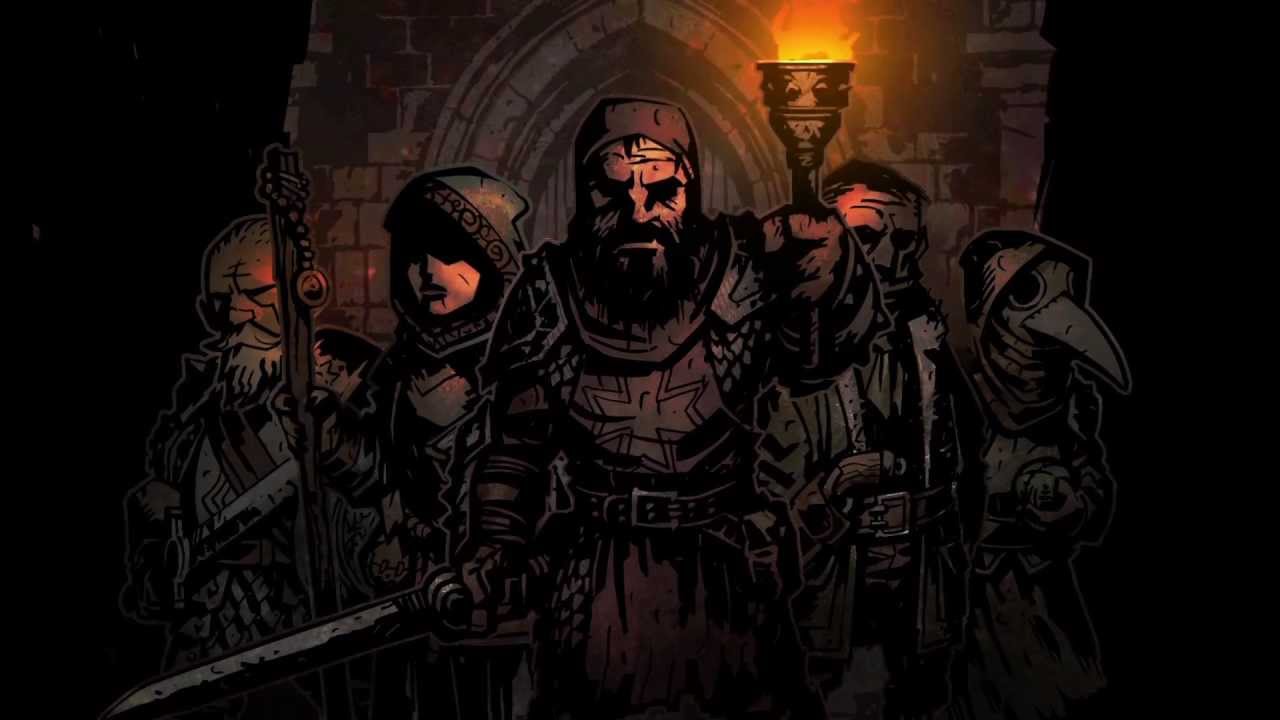
Darkest Dungeon is currently available in Early Release on Steam. In this game, you take on the role of the heir of an ancient estate that has been overrun by unspeakable horror. Your job is to recruit heroes and lead them into the depths to combat the growing evil that has overtaken your ancestral home. As they battle against the darkness, your heroes will face unimaginable horror, psychological stress, plague, famine, and death. Similar to classic games such as Wizardry or XCOM, your heroes, if they survive, will gain in experience and skill, but also may be permanently corrupted by their experiences. Death is also an ever-looming threat, and with the game state saved in real time, death is permanent. To aid you in your task, you can spend your recovered gold and resources to upgrade your manor, giving your heroes access to better equipment and skills as well as providing means to combat the stress and psychological ailments that are an inevitable result of facing the monsters in the dark.
Although the game is still technically in beta, it is very much playable. Currently, the game features 10 hero classes, 3 dungeon environments, dozens of monsters, hundreds of items, and 3 bosses. Upcoming content includes random events for the manor, another dungeon environment, several more bosses, at least four more hero classes, and finally access to the end-game dungeon from which the game gets its title.
At this point I've logged over 20 hours into the game already, and I have yet to complete all of the content that is already available. Depending on who you ask, the game is either crushingly difficult or entirely too easy; for myself, I have found it generally challenging but playable, but prone to occasional disaster when random events don't go your way. The hero classes are varied and unique, with different sets of skills to try out and improve. The dungeons, which somewhat repetitive in nature, offer enough variation in your mission and contents to keep each trip into the darkness interesting. Overall, for a game in beta, I have been very pleased.
Intrigued? Check out the trailer below, and if you're still interested, by all means go ahead and purchase into early release for $19.99. That's a pretty good price for any PC game, and it gets you full access to the final version when it's released. In addition, there's a ton of Let's Play videos featuring this game on YouTube which are worth checking out if you're on the fence. Anyway, enjoy the video below, and thanks for reading.
Subscribe to:
Posts (Atom)