The most interesting part of the game isn't placing your tiles though. Rather, each round you randomly draw three tiles from the bag. Then, each player secretly decides to discard one tile and set a price on the other two. Once every one has made their choices, you all reveal them, and starting with the player whose turn it is, you can choose to buy one of the tiles from another player at the price he or she has selected. And here's where things get interesting.
Price your tile too low, and your opponent gets a valuable tile that they may be able to score with over multiple rounds. But price your tile too high, and not only do you not get any income when no one buys it, but you also have to pay that money to keep the tile for yourself. Furthermore, based on the way the buying works, it's possible that all of your tiles get purchased, leaving you with just one new one, while your opponent each place two tiles that round. Of course, most of the time the quality of your tiles is much more important than the quantity - but still, that's not typically a winning strategy.
The game is played over five rounds, with only one or two of the victory conditions actually scoring for that round. If you find yourself falling behind in points, after round two you do earn some additional funds to help you catch up. While these funds can be converted into points at the end of the game, ultimately they are a pretty poor source of points, so in practice this doesn't always balance the scales as much as you might think.
The components of the game are beautifully illustrated and solid craftsmanship. The markings on the tiles are easy to identify, and the different victory conditions do a solid job of demonstrating exactly what counts for points for that condition without making you consult the rulebook to read how they work. Speaking of which, the rulebook is short and sweet, and you probably won't need more than 15 minutes or so to teach a new player how to play.
Overall I enjoyed this game very much. This is a great example of a game that is simple to learn and play, but has a surprisingly level of depth as you get into it. The game comes with a good selection of different win conditions and a huge bag of tiles, so there's a lot of replay value. Additionally, from my experience, the game plays quite well with anywhere from 2-5 players. If you like tile-placement games or are looking for a simple but also subtly complex game, definitely give Isle of Skye a try!


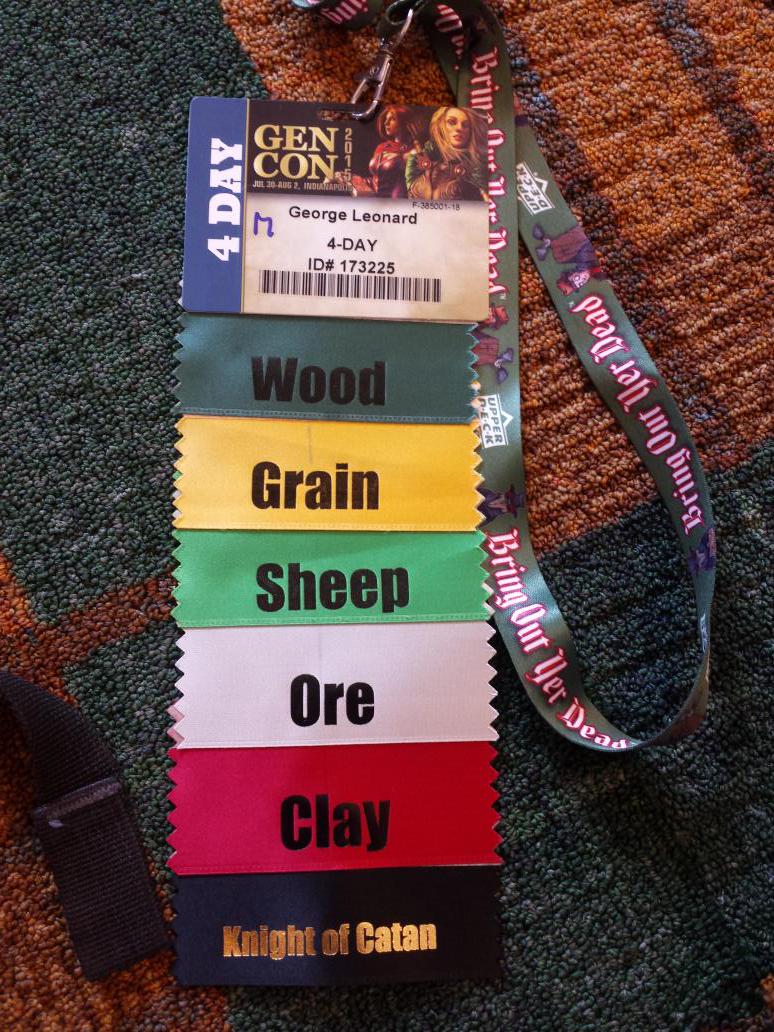
 ), where I learned that they have a deal in place that you can earn different colored ribbons for demoing different games within their section of the exhibit hall, and once you have a set of all five, you can redeem them for a one-time 50% discount off any one game sold at the convention. So I spent Friday afternoon and Saturday morning not only earned my five ribbons, but also helping my wife and friends earn theirs as well.
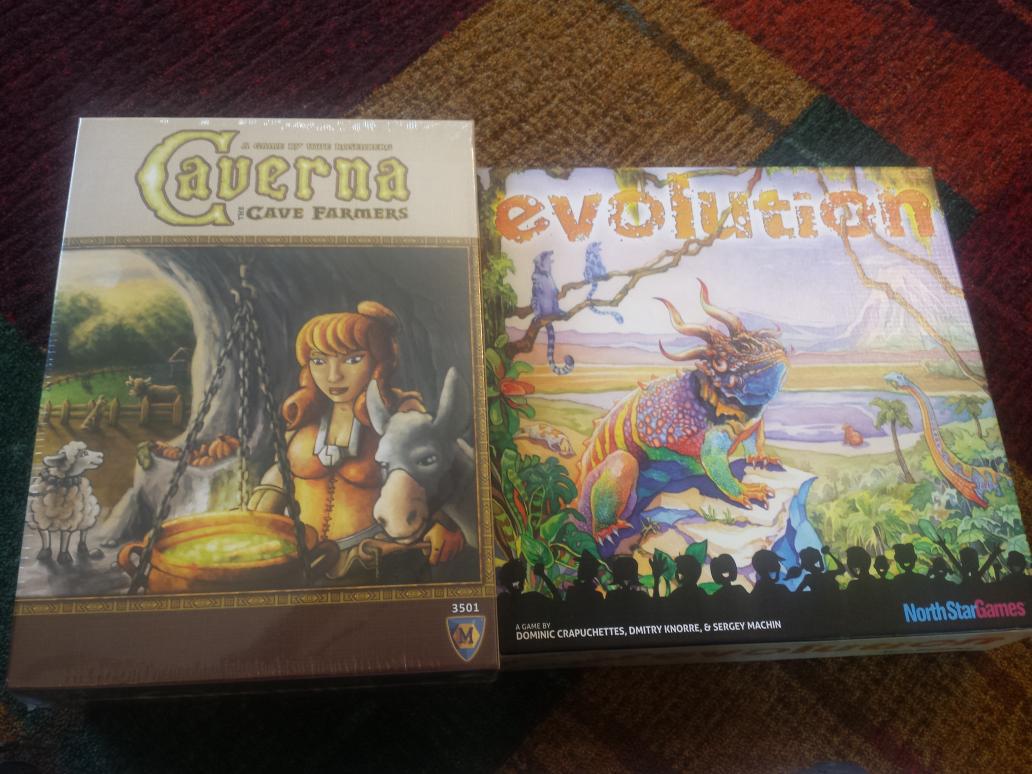
 (which I will be sure to review soon). Caverna retails for nearly $100, so my 50% off discount was quite nice. I also ended up purchasing a fun game called
 , which I will also be reviewing soon. As they say, to the victor goes the spoils: