Well I'm back to writing this week, but not exactly what I expected. I ran out of time this past weekend and barely even got started on my Standard Pauper review of Hour of Devastation. My friend and I also still haven't resumed our writing exercises. I do seem to be getting back into the discipline of getting blog posts out on a consistent basis again at least, so I'm seeing some progress there.
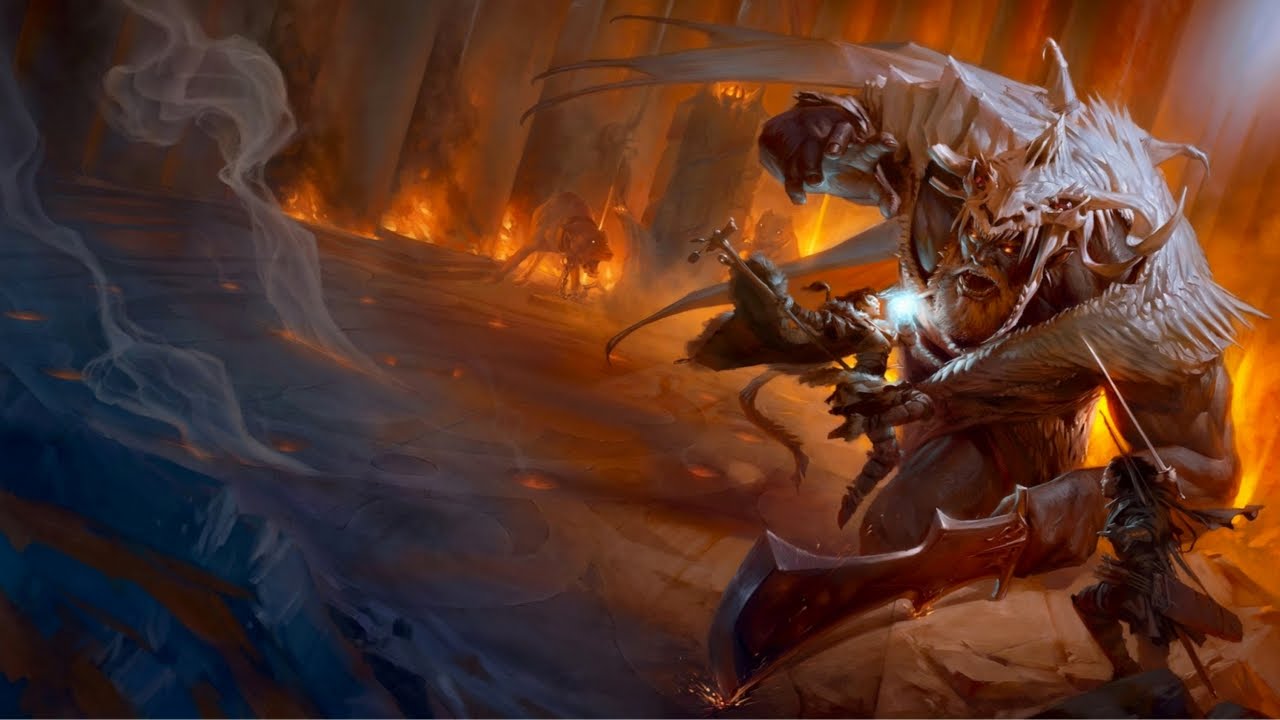
But this week in my wife's birthday, and to celebrate, I decided to host a special party with some of our friends and run a one-shot D&D session for them. Which means I'm busy creating a four hour adventure for this group, which looks like it may be as many as eight players.
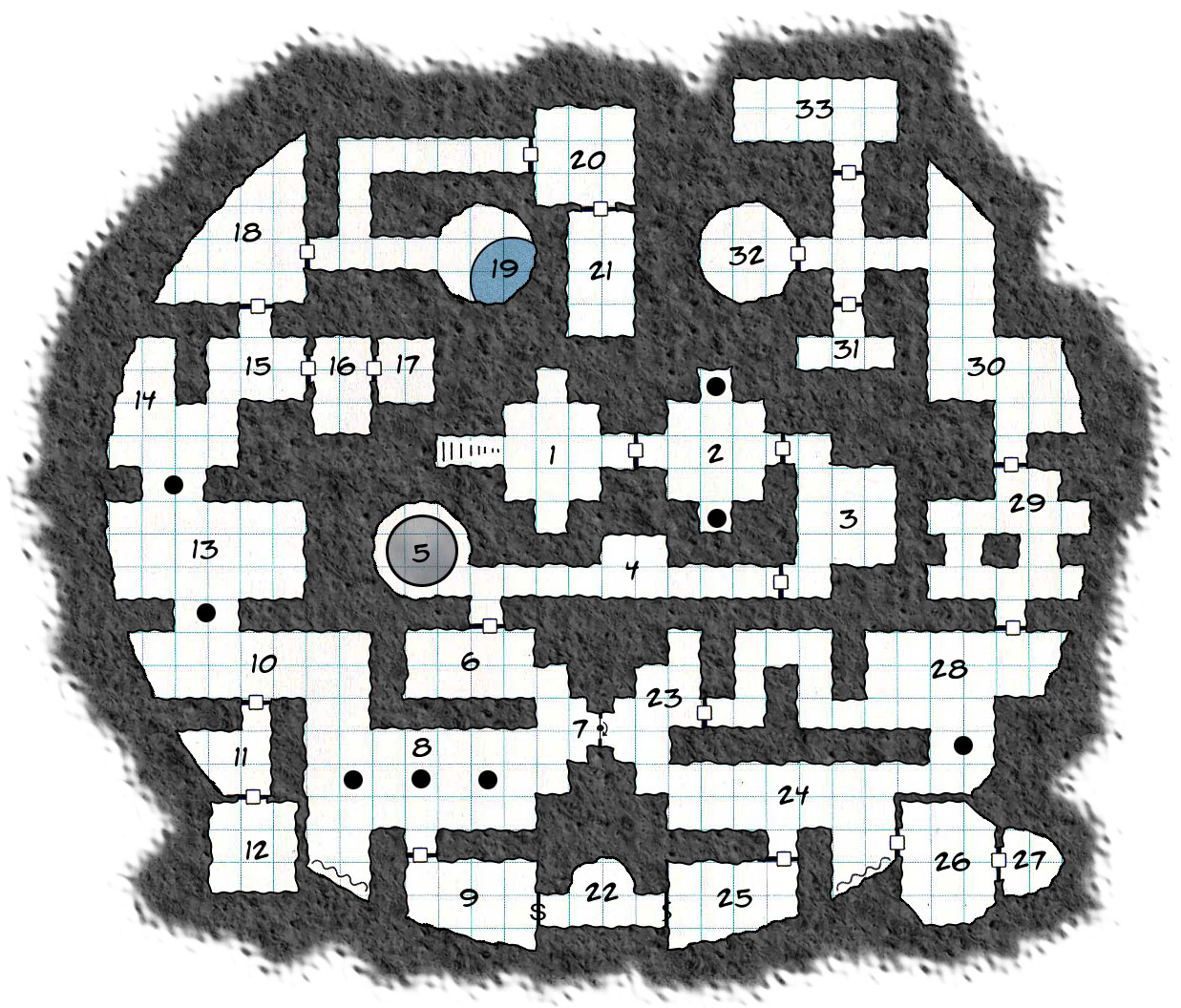
For this adventure, I'm using two tools I've discussed recently on my blog. I started by browsing the free-use maps from Dyson's Dodecahedron, and then used his adventure hook to brainstorm a specific Five Room Dungeon for the session. I've got the whole thing outlined; now it's just a matter of fleshing it out with text and monsters and descriptions. Assuming the whole thing goes well, I may even throw it up on the Dungeon's Masters Guild.
So while it may not be the writing I was expecting - at least I'm writing!
Finally, as I announced earlier today on Twitter, congratulations to Klimon, who won the free booster pack of Hour of Devastation as the Door Prize for the MPDC League. All of the booster packs from the league are already waiting for the winning players in their collection, having been added by Wizards of the Coast earlier today. I'm definitely looking forward to the next season of this great event!
Showing posts with label D&D. Show all posts
Wednesday, July 12, 2017
Saturday, July 8, 2017
Five Room Dungeon
One of the best tools I've ever found for designing a side-quest or short adventure is the Five Room Dungeon Model, which I believe originated with John Four's Roleplaying Tips website. In case you're unfamiliar with it, here's the short version:
Room 1: Entrance And Guardian
Room 2: Puzzle Or Roleplaying Challenge
Room 3: Red Herring
Room 4: Climax, Big Battle Or Conflict
Room 5: Plot Twist
The idea is that a good adventure includes an opening conflict, an obstacle that you can't just kill or destroy, a distraction or diversion, a face-off against significant odds, and some sort of twist or link to the next adventure. Its brevity, variety, and focus is actually what makes it so good. Your players don't waste time wandering around fighting off random monsters; instead, each encounter is significant, interesting, and engages different types of players. If you're interested, you can actually download an e-book with 88 unique dungeons built using this model.
While this specifically was written for a short dungeon, it actually easily can be used as an outline for a larger dungeon complex, a major adventure arc, or even a campaign. I certainly have made use of it both for individual adventure locations in my current D&D campaign and the overall flow for the adventure. So if this is something you haven't used before, definitely read the whole article and start using it for your own adventures.
Saturday, May 27, 2017
RPG Cards
Today I want to share with you another awesome resource for your roleplaying games. A person who identifies him or herself only as crobi created a great online program called RPG Cards that allows you to create and print small cards to use as handy references for spells, monsters, magic items, and the like. It uses some fairly simple formatting code, which you can view on this page, and allows you to customize with a variety of rich text, images, and colors. There is also a sample file you can view that shows you a variety of different cards whose code you can then use as a starting point for your own cards.
Once you created your cards, you can print them out on A4 size page, which fits 9 cards altogether on the default settings. But of course, the size of each card, and the size of the paper you want to print them, it just one of several different options you have at your disposal. You can also save the file locally and then load it back up next time you come to the website, although the page itself records its last state so everything is just as you left it next time you come to the site (assuming you're accessing it from the same computer and same browser as before).
I primarily have been using this as magic item cards to hand out to my players as they acquire custom magic items. Here are a few examples:
They are surprisingly fun to make and play with. Why not give it a try?
Friday, May 12, 2017
Dyson's Dodecahedron
As I have been prepping for the Dungeons and Dragons adventure I am running with my group, one of the resources I am constantly in need of is maps. Fortunately, there are a whole host of maps available online. Most of those, however, are either copyrighted materials or are only available for personal use. So while I don't have any plans on publishing my adventure in the near future, I still very much was hoping to find some maps that I could include in such a product should I decide to put something like that together.
And that's when I discovered Dyson's Dodecahedron. While the author originally used this page for RPG characters and thoughts about roleplaying in general and Dungeon's and Dragons specifically, what he is now known for is his amazing old-school maps. He publishes several such maps a week, each with a short blurb describing a possible adventure hook and/or the circumstances that led him to create the map. But even more remarkable, as long as his Patreon sponsorship continues above the $300 mark for a particular map, he releases them under a free commercial license. This means that anyone can use, reuse, remix and/or modify the maps on a royalty-free basis, with the only restriction being that they must include attribution such as“Cartography by Dyson Logos” or “Maps by Dyson Logos." You can view all the maps that have been released under this commercial license here.
This is a fantastic resource, and one that I highly recommend. Check it out for yourselves.
Thursday, January 26, 2017
The Andrenjinyi of Maori
About a month ago, I linked a cool resource for a Polynesian-inspired roleplaying game called Mythos of the Maori. I am currently preparing to start a brand new adventure for one of my D&D groups that I have entitled "The Andrenjinyi of Maori," which utilizes the themes and concepts from that setting and combines them with the concept of a powerful celestial known as the andrenjinyi, a monster found in Kobold Press' Tome of Beasts.
Today, I want to share with you the background and one of the hooks for this adventure.
Our heroes receive a vision about this ancient celestial and learn that its power is being corrupted by unknown agents of
darkness. This vision further warns that should this celestial fall to this
corruption, it could have devastating implications for the realms. The
characters are tasked with learning the location of the island of Maori, discovering
the source of the corruption, and putting an end to it.
I can't wait to unveil this great setting for my players and share in their journey to unravel the mystery and decide the fate of the andrenjinyi.
Today, I want to share with you the background and one of the hooks for this adventure.
Aeons ago, as creation still lay in its primordial shape,
the first and greatest of the world’s spirits known as the Rainbow Serpent shed
its scales. These scales fell to the earth, each spawning a gigantic,
black-headed snake sheathed in scales of every color. The Rainbow Serpent then
departed for the stars, leaving its children as powerful guardians of land and
sky, sun and rain, birth and destruction. These ancient serpents were known as
the andrenjinyi, and from their sacred pools they ruled ageless and immortal,
demanding sacrifice and rituals but offering protection for all those who
submitted to their code of law. With their link to the primordial stuff of
creation, the andrenjinyi held the power to shape creation to their will, often
creating a fantastic menagerie of creatures to guard and serve them.
Yet, for all their power and immortality, the andrenjinyi
have all but vanished from the world, and the knowledge of the Rainbow Serpent
with them. Today, only one of these primordial spirits still exists, ruling
over a tropical isle known as Maori. For centuries, the Maori people have dwelt
in communion with this being, offering it sacrifice and ritual and binding
their community to follow the ancient codes and laws that it dictates.
Foreigners are forbidden from setting foot on Maori, save for a small district
within their chief city of Kahului, where merchants gladly trade desirable
wares for items that can be found nowhere else: exotic fruits and plants as
well as unique items ensorcelled with the primordial magic of the andrenjinyi.
I can't wait to unveil this great setting for my players and share in their journey to unravel the mystery and decide the fate of the andrenjinyi.
Friday, December 30, 2016
Mythos of the Maori
First off, I'm just going to concede that at least for the rest of the holiday season (including next week), my blog posts are going to be somewhat sporadic. I will do my best to post twice a week, but my schedule is all out of sorts, and my time in front of computer is somewhat limited. Enough said.
Currently, I am in the midst of writing a homebrew adventure for the Dungeons & Dragons campaign I am running. For this adventure, the players will be journeying to an isolated tropical island where they must unravel a mysterious threat against an ancient power that protects and rules over the islanders. I have been researching precolonial Hawaii specifically and Polynesian culture in general as inspiration for this adventure.
In the process of searching online for resources, I came across a very cool 'rules-light' roleplaying game system called Mythos of the Maori that is currently available for free from Mythopoetic Games. It started out as a non-fiction text on the mythology and folklore of the Polynesian people prior to their contact with Europe based on the author's childhood and early adulthood spent in New Zealand. Eventually though he deemed it unpublishable, but returned to it later and used it for the basis of a unique roleplaying game. The rules document itself is quite interesting, as most chapters the author intentionally blurs the distinctions between the rules and the setting, making it necessary for the reader to work through the entire book before having a good understanding of the system and how it all connects together. While he admits that this is both ludicrous and unfair to his readers, it is by design to deeply engage a potential GM in the setting.
For my adventure, I will certainly be referencing the third chapter extensively as a helpful resource for the language, cultural beliefs, folklore, and religious practices of the islands' inhabitants. As the characters will also need to eventually gain status among the islanders, the rules in the fourth and fifth chapters will also be quite helpful.
Anyway, this is a great resource if you're at all interested in ancient Polynesian culture. Hope you enjoy it.
Tuesday, November 15, 2016
Writing Assignment - The Sphinx's Game
So my friend Phil and I have been working through the Master class episodes of Writing Excuses, which is a series of fifteen minute podcasts designed to cover the essential elements of what it takes to be a good genre fiction writer. Each week includes a specific writing prompt that connects to that week's topic.
Today I want to share my homework from Episode 6, where the prompt was to take a recent gaming experience where you lost and use the thought process behind that experience to inspire the elements of a story. I ended up with a piece that sounds almost like a transcript from someone's most recent D&D campaign. It's somewhat lighthearted, and I liked the way it turned out. I hope you do too. And at just over 1,000 words, it's a pretty quick read.
The Sphinx’s Game
The beautiful ruby clutched in the hands of the jackal-headed statue made a stark contrast to the gigantic leonine figure whose sharp claws were, at that moment, shredding apart the remains of Bard and stuffing chunks of his corpse into the mouth of her shockingly beautiful face.
“Guess that wasn’t the right answer,” was the best I could come up with at that moment. “Any ideas, Wizard?”
My companion, robed in robes so purple they appeared black, had pulled out a musty tome from his pack and was quickly scanning the pages. “There’s got to be answer in ones of these books. Make yourself useful Rogue and help me look.”
I shook my head, but she didn’t even notice, engrossed as she was. I doubt this monstrosity would ask a question whose answer could be found in one of Wizard’s books, but I’d been wrong about such things before.
“We’re wasting our time,” Warrior complained, his greatsword gripped in both hands. “Bard may be dead, but we can still fell this beast. With the reward for that ruby, we can probably even afford a resurrection spell once we get back into town. What we need to do is come up with a plan.”
At that moment, the large creature finished her meal and simply sat back on her haunches, her crystal blue eyes staring back at us coolly.
“Let’s listen to the riddle one more time. Maybe the Divine will reveal something to me,” Cleric suggested. Without waiting for reply, he began approaching the magnificent beast.
“Perfect! Cleric is the distraction, Rogue. When he gets close, strike from behind, and then I’ll draw her attacks. We can do this, but we’ve got to work together!”
I glanced at Warrior, but shook my head. “You’re all crazy. Everyone knows that the best way to win is to cheat. And if you can’t cheat, you change the game entirely.”
“Will you two shut up!” Wizard shouted. “I’m trying to concentrate!”
And with that I dashed away, hugging the walls of the large cavern, hoping my cloak and hood might disguise my approach. Near the ruby, the monstrosity had just finished reciting her damned riddle again, but it seemed only Cleric had really been listening. She bowed before it, then slowly backed away towards where Warrior and Wizard were arguing.
I reached the back of the cavern, and best I could tell the creature hadn’t noticed my approach. I slowly crept forward, thinking perhaps I could grab the gem and escape unseen. But all such hopes were dashed as the creature’s feminine head turned towards me and placed her two paws between me and the ruby. So much for that approach. Guess it was time to improvise.
I threw back my hood and raised my hands, hoping the creature would interpret the gesture as meaning I was no threat. It was quite innerving to see her blonde hair, blue eyes, and perfect skin atop the body of an enormous lion, and the wings that soared above her only made her all the more intimidating. But I put on my most winsome smile and approached.
“Such beauty is unexpected in a place such as this. Might this poor mortal hear the sound of your name, beautiful one?”
The creature licked its teeth, and for a moment I feared it would attack. But then it replied, “I am Sphinx. You are either an intruder, or perhaps, a welcome guest. Have you an answer to my riddle?”
“Sphinx? Such a name hardly befits one such as magnificent as you. One who is so wise, so beautiful, so fierce, and so strong. Tell me, madam, who has imprisoned you in this dark place? Surely you are not here on your own will. Would not the rugged peaks or the verdant forest be so much more to your liking?”
Her face softened into a smile, and I swear to the Divine that I heard her purr before she replied, “You are well spoken for a human. Such fair words for such a small creature. I might ask the same of you. Why have you come to these depths?”
“Great Sphinx, you must know that those who live above crave such trinkets as the ruby that stands before you. While I have no need of such frippery, alas I bound by my pledge to bring it back to the surface. But one such as you surely has no need for such a trinket. You are far more wondrous than any dirty stone.”
“Little human, you think I shall simply give it to you in exchange for your kind words? I am not so easily charmed.”
I gulped. “Of course not, magnificent one. Instead…instead I offer my companions. They are the ones that have forced me against my will to intrude upon you. Do with them what you will. Allow me to take this ruby, and if they cannot answer your riddle, do with them as you will. I only ask that you spare your humble servant.”
I glanced back at them. Warrior and Cleric were closer than I thought, and Cleric’s eyes were wide. Maybe I hadn’t been as quiet with my words as I should have been. Wizard was now seated on the ground, a pile of books around him. He tossed another one aside and picked another one up, seemingly at random.
“You amuse me, human. It has been a long time since I have enjoyed another’s company. You are certain, however, that you do not instead wish to answer my riddle?”
“I am unworthy, Sphinx. For surely there are none who are as wise as you.”
She smiled, and then her paw whipped out at me, knocking me off my feet and pinning me to the ground. “Adventurers,” she said. “Have you an answer to my riddle?”
They made no reply.
Finally, she continued, “Then I propose a new bargain. Your friend here has decided to stay with me. In exchange for his service, I offer you the ruby you seek. Take it and be gone.”
My three companions glanced at each other. Cleric shook her head, but Warrior just shrugged. Wizard quickly stowed his books, then approached. He slowly walked up to the statue and removed the gem. He bowed to the creature and then glanced at me.
“Flattery works on dragons, Rogue. Not on a sphinx.”
With that he turned and walked away. All too soon I was alone with this monster.
“Now,” Sphinx said, releasing me from her grip with a wicked smile. “Let us talk.”
Thursday, October 13, 2016
Playing RPGs with Cards Instead of Dice
This week I came across a fascinating new twist to bring to your roleplaying game - use playing cards instead of dice. While I encourage you to check out the original article linked above, the basic idea is that you deal out a card array of 12 cards to be shared among the players as well as a hand of 5 cards that the GM keeps concealed in his hand. Then, any time that a roll is required from the players, they instead pick a card from the array in front of them and use that result instead. That player then draws a new card and adds it to the array.
However, the card that was just played isn't discarded. Instead, that player hands it to the GM, who adds it to his own hand of cards. Whenever the GM would normally roll a dice, he or she also picks a card in hand, plays it, and then discards it into the discard pile, where it will eventually be shuffled back in once the entire draw pile has been used up. The GM is also limited to only twelve cards in hand.
This obviously creates some interesting tension for the players. While they are free to use their highest cards to guarantee success, they are also giving the GM that same ability.
Now obviously you have to do some adjustments depending on the game system you're using, especially if you also include the face cards in the mix. For D&D or other games that resolve around a d20, the simplest solution (and the one advocated in the original post) is to use red cards for their face value (with aces counting as a one) and black cards as being worth ten plus their face value. The author also has the following rules for face cards:
I love the tactical strategies and considerations that this opens up for players and can't wait to try this out with my own gaming group. Thanks to Run A Game for such a great idea!
However, the card that was just played isn't discarded. Instead, that player hands it to the GM, who adds it to his own hand of cards. Whenever the GM would normally roll a dice, he or she also picks a card in hand, plays it, and then discards it into the discard pile, where it will eventually be shuffled back in once the entire draw pile has been used up. The GM is also limited to only twelve cards in hand.
This obviously creates some interesting tension for the players. While they are free to use their highest cards to guarantee success, they are also giving the GM that same ability.
Now obviously you have to do some adjustments depending on the game system you're using, especially if you also include the face cards in the mix. For D&D or other games that resolve around a d20, the simplest solution (and the one advocated in the original post) is to use red cards for their face value (with aces counting as a one) and black cards as being worth ten plus their face value. The author also has the following rules for face cards:
- King: Succeed at cost. You automatically succeed, but some complication, error, or unintended consequence is introduced by the GM. After playing a King, do not give it to the GM. Place it in the players' discard pile directly to be shuffled back in if .
- Queen: Failure, gain 1 treasure, placing the Queen in the score pile for the rest of the session.
- Jack: Failure, gain 1 experience, placing the Jack in the score pile for the rest of the session.
- Joker: Critical failure, gain 1 experience and 1 treasure. The GM describes how your action went horribly wrong or caused additional foul consequences. Place the Joker in the score pile for the rest of the session.
I love the tactical strategies and considerations that this opens up for players and can't wait to try this out with my own gaming group. Thanks to Run A Game for such a great idea!
Tuesday, August 16, 2016
My GenCon Report
Hard to believe it's already been almost two weeks since GenCon. In case you missed my previous post on the subject, I had a chance to once again take in one of the largest, best-attended gaming conventions in the world on August 5-7. It was an amazing three days (I had to skip Sunday due to other commitments). My wife and I demoed a bunch of new games, played in two different roleplaying adventures, attended lots of different seminars, and hung out with a lot of great people. Here are the highlights:
- Although my wife and I attended lots of great seminars put on by the GenCon Writer's Symposium, my two favorite seminars were a fantasy cooking class and one on mental health. In the fantasy cooking class, the presenter took us through an exercise designed to allow you to create a custom cuisine for any setting, based on the climate, the technology, the fauna and flora, and other cultural considerations. In the mental health seminar, we heard from several prominent authors who have struggled with mental illnesses, including best-selling author Patrick Rothfuss. The panel was very transparent about their own struggles and discussed some unique challenges associated with mental illness and the art of writing.
- As I mentioned above, my wife and I played in two different RPG sessions. The first was a Dungeons and Dragons 5th Edition Adventure's League session, where we came to the aid of a city besieged by modrons and helped reestablish order in the city. We both played 1st level characters in a party with mostly 3rd and 4th level characters, so we spent far too much time hiding in the back and getting 'one-shotted' by the monsters, but it was still quite fun. The other session we played in was the Planet Mercenary RPG, where we joined a crack team of mercenaries to locate and bag a weapons-dealer who, as it turns out, had put out a major bounty of her own head hoping to fake her own death with a gigantic explosion. We managed to beat the other teams to the punch, ambush the weapons dealer, and collect the bounty without causing massive destruction in the process. Needless to say, that was also very fun.
- I also demoed lots of different games, including Tyrants of the Underdark, Mistborn House War, and Isle of Skye. Tyrants was a cool combination of Risk and Dominion, with some very interesting and thematic elements associated with dark elves. Mistborn was an absolute gem, with all sorts of conniving and bargaining between the players as well as the opportunity to try and totally change the win condition of the game and hose the rest of the players. Isle of Skye is a relatively simple tile-placement game, with lots of replay value thanks to the sheer number of tiles and the changing win conditions. All three are excellent games, and expect me to write fuller reviews of each once I get my hands on them.
- My wife and I also had the opportunity to hangout with Dan Wells and Howard Taylor, two of the four hosts of the Writing Excuses podcast, and we even got to go to dinner later with Dan and talk books, games, pop culture, and all sorts of hilarity. Once these episodes of Writing Excuses goes live, anyone with a discerning ear could easily pick out the sound of my wife laughing during some of the more funny bits.
Tuesday, May 17, 2016
GenCon 2016 Preregistration
This past weekend preregistration opened for GenCon, which is the largest gaming convention in the world, and is held right here in my own state of Indiana. Although the event itself isn't until the first week of August, tickets for the huge variety of special events and seminars were finally available this past Sunday. And while there's a ton to see and do without having to participate in any of these events, in past years these have definitely been some of the highlights of my experience at this convention.
My wife and I will be spending a great deal of time at the Writer's Symposium, which is nearly a convention within the convention. It is a professional symposium for writers of speculative fiction. This year's Guest of Honor is none other than Robin Hobb, author of the Realms of Elderlings series of books, which are definitely among my favorite fantasy series. Any panel she is speaking on, I plan on attending.
Other events that I signed up for include playtesting Howard Taylor's new Planet Mercenary RPG, participating in the D&D 5th edition Adventure Leagues games, attending the Writing Excuses podcast recording, and getting a chance to play the newly released Tyrants of the Underdark board game.
If you're reading this and are planning on attending GenCon, I'd enjoy the chance to say hello. Let me know in the comments below. I can't wait for August!
Thursday, March 10, 2016
Siege of Dragonspear
If you're a longtime reader of this blog, you already know about my love for roleplaying games in general and Dungeons and Dragons in particular. Part of my love for this amazing roleplaying system came from literally hundreds of hours playing and replaying and modding the Baldur's Gate video game series. Although somewhat dated by today's standards, in my opinion this remains the pinnacle experience of the second edition Advanced rules, and what is probably the best video game iteration of those rules ever made.
You can imagine my excitement, then, when I found out that a new expansion was being developed called Siege of Dragonspear. Now at first, the choice to make an expansion seems odd, given that the original game is nearly 20 years old. But in this case, it's being developed by Beamdog, who have been systematically releasing updated versions of almost all the original Infinity Engine games and bringing them back to life for a new generation of gamers.
Siege of Dragonspear will feature an entire new story arc tied to a charismatic warrior known as the Shining Lady who is leading a crusade north to the ruins of Dragonspear Castle. It promises to at last reveal the events that more cohesively connected the original Baldur's Gate and its sequel. It also includes the return of many of the original cast (including most of the original voice actors!), brand new items, quests, and classes, major UI and graphical improvements, and brand new areas hand-painted to match the style of the original.
The game is currently in closed beta, with a scheduled release date of March 31st. You do have to purchase the enhanced version of Baldur's Gate from Beamdog in order to play, however; the original version of the game won't be compatible. Purchasing both will set you back almost $40 retail (although I wouldn't be surprised if you could find the Enhanced Edition cheaper than the $19.99 list price), but in my opinion it's well worth the investment for the hundreds of hours of content you'll receive. It's also worth mentioning that both games will be available across multiple platforms, including Windows, Mac, Linux, IOS, and Android.
I certainly intend to pick up Siege of Dragonspear on the day of release. Now I just have to get my party from Baldur's Gate ready to go...
Wednesday, December 23, 2015
Medieval Demographics Made Easy
I'm going to be traveling for Christmas and New Years, so my blog posts may be a bit sporadic over the next couple weeks. Rest assured I will do what I can to get two posts in each week, but the timing may not be as consistent as normal. Sorry about that.
Between my halting endeavors at writing fantasy and my resurgent involvement in Dungeons and Dragons, I am always on the lookout for helpful resources when it comes to world-building. Today I want to highlight one such resource - an article entitled "Medieval Demographics Made Easy," written by one S. John Ross. In this article, Ross looks at real world examples of medieval demographics and then uses those examples to extrapolate what an pseudo-European fantasy setting might look like.
The articles examines several key factors for world-building:
So next time you've got some questions about what medieval demographics might look like, you've got an easy resource at your fingertips!
Between my halting endeavors at writing fantasy and my resurgent involvement in Dungeons and Dragons, I am always on the lookout for helpful resources when it comes to world-building. Today I want to highlight one such resource - an article entitled "Medieval Demographics Made Easy," written by one S. John Ross. In this article, Ross looks at real world examples of medieval demographics and then uses those examples to extrapolate what an pseudo-European fantasy setting might look like.
The articles examines several key factors for world-building:
- Population Density - in other words, how many people (on average) live within a square mile of the kingdom in question.
- Population of the Cities, Towns, and Villages - in other words, given that population density, how many cities, towns, and villages would be expected, and what would the population of those settlements be.
- Merchants and Services - in other words, given the population of a particular settlement, what kinds of goods and services would be available there. After some general guidelines, the article looks in more details about agriculture, castles, law enforcement, institutions of higher learning, and livestock.
So next time you've got some questions about what medieval demographics might look like, you've got an easy resource at your fingertips!
Thursday, December 10, 2015
Collaborative Story-First Character Creation Results
A couple weeks back, I wrote about a character creation process for D&D 5th edition that I adapted from the Fate Core System. Essentially, this was a "story-first" approach where each character creates their own background and first adventure, and then each other character assigns themselves a role in two of the other character's adventurers, immediately creating a sense of connection and camaraderie among the party.
So I went through this process with a group of my college buddies, none of whom have ever played Dungeons and Dragons before (although they are all very familiar with the fantasy genre in general). Between the creative free-writing assignments for their backstory, first adventure, and secondary role in two other adventurers, as well as the actual process of rolling up the stats for the characters, it took us almost four hours, which is a long time for a session dedicated to character creation. But as my design document states, this is a highly collaborative form of group storytelling, and it should come as no surprise that it took us a whole play session to complete.
We ended up with four separate backgrounds (one for each character), plus three tales that were the result of their collaborative storytelling. If you're interested in seeing the results, feel free to check them out here. But overall I was very happy with the process. I've got several great threads that tie the characters together, the potential for some very interesting interactions between the players, and several hooks that will tie into the story that my players are already telling. While it's a lengthy process, it's one that I highly recommend you try. If you're interested, you can download my detailed description of the process here.
This group will be meeting next Friday night, so in a few weeks I'll be sure and recount the highlights of this experience. I'm certainly looking forward to it!
Tuesday, November 24, 2015
Fate Core Character Creation
I am in the process of preparing a new Dungeons and Dragons 5th edition campaign for some of my college buddies, and wanted to do something special when it came to character creation. So I spent some time with my friend Google looking for some group character creation guidelines. In the process, I came across a Character Creation ruleset that is part of the Fate Core System, a ruleset perhaps best known for being the engine that drives the Dresden Files RPG
. After perusing the rules, I was quite impressed with how they helped players not only create interesting and unique characters, but also guided them through the process of linking those characters' stories to one another. Here's a quick summary of how that works:
So what do you think?
- Each player comes up with a high concept and a trouble. The high concept is essentially a short phrase that stands in for the typical race and class in fantasy RPGs, while the trouble is something in that character's background or personality that consistently keeps him or her from living out this calling.
- Each player then comes up with a character background. This background includes their upbringing, an event that forced the character into his or her high concept, and that character's first adventure. Each of these steps turns into a short paragraph, and the first adventure is recorded on a separate index card.
- Each player then comes up with a secondary role in another character's background. The players pass around the index card with their first adventure summary to another player, and that player then connects their own character to that adventure in some sort of supporting or secondary role.
- Each player then passes the index card again, repeating the previous step. Afterwards, each character is organically connected to two other members of the group.
- Each player finalizes the rest of the details about their character. Only once these elements are complete does the player pick out the relevant stats and abilities of their character, based on the stories that have already been crafted.
So what do you think?
Saturday, August 29, 2015
Creating Magic Items in D&D 5th Edition
As I've mentioned in some recent posts, I have been playing Dungeons and Dragons 5th edition with my gaming group, and we have absolutely loved it. Our group actually started together playing Pathfinder, and on the whole we've found D&D 5th edition to be superior in almost every way. But one thing I enjoyed in Pathfinder was some pretty detailed rules concerning crafting magic items. Granted, the way that system works, it's almost trivially easy for players to do this, but at least there are detailed rules to guide them. In comparison, in D&D 5th edition the rules for crafting magic items are paper-thin, and seem more tacked on than actually integrated with the system. Considering the sheer number and variety of magic items described in the Dungeon Master's Guide, this seems like a pretty major oversight.
Now that said, I actually like the removal of what one author termed the magic item economy, where it was trivially easy for characters to buy and sell magic items to their heart's content. Nevermind that even the average merchant would never be able to afford the tens of thousands of gold selling price, or would be hard pressed to ever find a buyer for said item. Making magic items rare and the ability to craft them a lost art certainly makes for a better default gaming experience.
Nonetheless, I still wanted crafting rules that would work within that framework. And since the current rules set doesn't include them, and since I couldn't find anything online that I liked, I had to create my own. Here's a sneak peek:
Given the default environment for 5th edition, most magic items are considered relics of a previous age that are generally beyond the knowledge of the typical magic practitioner to create. In fact, recipes for how to create even the most common of magic items (such as a potion of healing or a first level spell scroll) are still considered uncommon treasures valued at hundreds of gold pieces (DMG 141). As such, the creation of any magic item is a major accomplishment, and one that should not come about without a considerable investment of time and resources.
Step-By-Step Creation Overview
1. Acquire the formula for the magic item.
2. Acquire the components needed to create the magic item.
3. Meet all of the prerequisites for the magic item, including achieving minimum character level, preparing each spell that will be produced by the item, and acquiring all of the material components for not only the magic item but also for each of the spells.
4. Calculate the total creation cost, the time required, and the difficulty of the skill check at the end of the creation process.
5. Complete the creation process by spending the required costs and time, make an Arcana check against the appropriate difficulty, and determine your results.
If you are interested, I would love to have a few more people who are familiar with D&D 5th edition take a look at the whole document and give me some feedback. If that's you, feel free to drop me a line and let me know.
Sunday, August 16, 2015
Why You Should Play D&D 5th Edition
As I mentioned in my summary of GenCon 2015, I had a blast participating in some D&D Adventure League sessions. In fact, I have been playing in a longterm Dungeon and Dragons 5th edition campaign since the beginning of summer, and I can honestly say it's the most fun I've ever had with a pen and paper roleplaying game. So today I wanted to share with you my top 5 reasons why you should be playing D&D 5th edition.
5. It's the quintessential D&D experience, done in a way that is fast and easy to play for GMs and players alike. One of the clear design goals of this edition was to make the game more streamlined, and it shows. Everything from character creation to combat to skill checks is simplified and moves quickly while still retaining the look and feel that most people associate with the D&D franchise.
4. It's surprisingly compatible with much of the "old school" D&D content. For the first time in its history, you can seek out some of the old first edition modules, swap out the monsters with their 5th edition counterparts, and run them with very little effort at conversion. Given that many people still remember these old adventurers as some of the greatest modules of all time, and that many of them are even available online for free, this is a very nice feature.
3. There's not a ton of content to master. At least to me, D&D 3.5 and its stepchild Pathfinder are absolutely bloated with new rules, new spells, new races, new classes, and what feels like an endless succession of options. For someone just coming back to roleplaying, that amount of content can be overwhelming. But at least thus far, Wizards has been slow to release much in the way of new rules, and those that exist are generally available for free as part of their seasonal Adventure Leagues.
2. Characters are created with distinct backgrounds and archetypes within a particular class, creating diversity even among characters of the same class. With 12 different character classes, all of which come with multiple archetypes, paired with 13 different backgrounds and 9 races, you end up with a lot of variety among different characters. Even better, much of this diversity is more background driven and less about power-leveling.
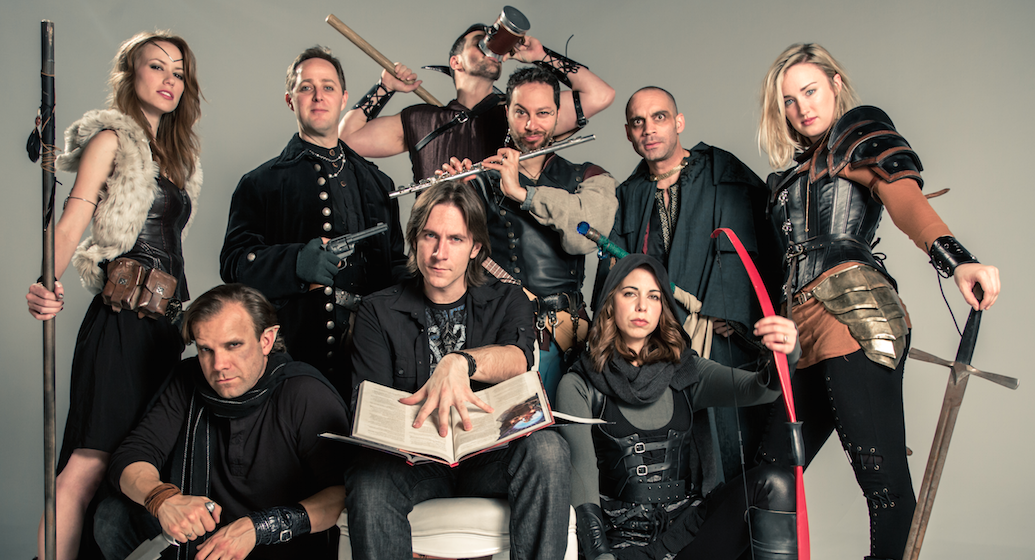
1. It's a whole lot of fun. Is there any better reason to play anything? This edition of Dungeons and Dragons has proven to be so much fun for me and several others that I've introduced back to the game. And excellent shows like Critical Role only add to the enjoyment I've had with this game.
So what are you waiting for? Order a copy of the Player's Handbook
, find a group, and get playing!
5. It's the quintessential D&D experience, done in a way that is fast and easy to play for GMs and players alike. One of the clear design goals of this edition was to make the game more streamlined, and it shows. Everything from character creation to combat to skill checks is simplified and moves quickly while still retaining the look and feel that most people associate with the D&D franchise.
4. It's surprisingly compatible with much of the "old school" D&D content. For the first time in its history, you can seek out some of the old first edition modules, swap out the monsters with their 5th edition counterparts, and run them with very little effort at conversion. Given that many people still remember these old adventurers as some of the greatest modules of all time, and that many of them are even available online for free, this is a very nice feature.
3. There's not a ton of content to master. At least to me, D&D 3.5 and its stepchild Pathfinder are absolutely bloated with new rules, new spells, new races, new classes, and what feels like an endless succession of options. For someone just coming back to roleplaying, that amount of content can be overwhelming. But at least thus far, Wizards has been slow to release much in the way of new rules, and those that exist are generally available for free as part of their seasonal Adventure Leagues.
2. Characters are created with distinct backgrounds and archetypes within a particular class, creating diversity even among characters of the same class. With 12 different character classes, all of which come with multiple archetypes, paired with 13 different backgrounds and 9 races, you end up with a lot of variety among different characters. Even better, much of this diversity is more background driven and less about power-leveling.
1. It's a whole lot of fun. Is there any better reason to play anything? This edition of Dungeons and Dragons has proven to be so much fun for me and several others that I've introduced back to the game. And excellent shows like Critical Role only add to the enjoyment I've had with this game.
So what are you waiting for? Order a copy of the Player's Handbook
Tuesday, August 4, 2015
GenCon 2015, Part One
Living local to Indianapolis, I had the opportunity most of last week to travel to GenCon, self-described as "the original, longest-running, best-attended, gaming convention in the world!" Over the course of three days, I played a variety of different tabletop games, attended some writing seminars, and got to participate in several sessions of the Dungeon and Dragons Adventurers League. So all this week, I'll be blogging about my experience at GenCon this year. Today, I want to discuss my experience with the D&D Adventurers League.
Participating in the league at GenCon is fairly straightforward. You sign up for whichever sessions you are interested, pay a small fee, and roll up your character according to their guidelines, which are very close to the standard character creation rules for 5th edition. These sessions are actually run for dozens of people at a time, broken down into individual tables run by gamemasters who are paid for their time. They are also restricted to characters within certain level guidelines, and to play a character higher than level one, you need to have completed previous sessions with the wider Adventurers League organized play (although not necessary at GenCon).
I ended up creating a Human Monk specializing in fire magic (thanks to the Human Variant that lets you take a feat at level one), and for my first session was paired with a party that was the maximum for that particular module. I basically hid in the back and used my marginal ranged abilities, especially when we found ourselves facing off against hook horrors and xorns who were part of an attempt by an elemental cult to retrieve an artifact stolen by a dwarf who we were hired to protect. In the end we defeated all the attackers, allied with the band of dwarves sent to retrieve the artifact, and closed the elemental node that the artifact opened.
Over the next two sessions, I helped defend a village against marauding beasts, was captured by a group of racist mercenaries, and was conscripted as a gladiator to satisfy the whims of a local city. I actually ended up dead in the arena, thanks to failing my death save four times in a row (which essentially required me to lose a coin flip four times). Even worse, this was my last session of the convention, and after four hours of play, I ended up forfeiting everything I had earned in that session (although at least I did retain my now level three character).
Overall, I had a very positive experience. The organizers did a great job assigning me to a table, the gamemasters were friendly, knowledgeable, and kept the games running smoothly, and on the whole the modules were varied and interesting. Despite the fact that I ended up dead, I had a great time in the process, and I definitely intend to play more at next year's convention. I only wish my schedule allowed me to travel down to some of the game stores in my area to participate in other Adventurers League games, but sadly they only play on evenings that I am otherwise engaged.
Next time, I'll talk about my experience at the writing seminars.
Thursday, June 18, 2015
Critical Role
If you're a regular reader of my blog, it should come as no surprise to you that I am a major fan of all things fantasy, and that includes fantasy roleplaying games as well. I have participated in all sorts of tabletop RPGs off and on since high school, and in particular have enjoyed Dungeons and Dragons in most of its iterations (including its red-headed stepchild Pathfinder).
One of the players in my current game recommended a recent webcast series put on by Geek and Sundry called Critical Role. In the past I've tried to watch various recordings people have made of their roleplaying sessions, and by and large I have found them tedious watching at best. So, it wasn't until recently that I finally decided to go check out the show.
If you've ever wondered just how good a roleplaying gaming session could be, you need not look any further than Critical Role. Of course, it helps that the entire cast is made up of professional voice actors who had already played together for quite some time before making the show. It also doesn't hurt that the show has quite high production values, with an animated intro and backstory for all the characters, an overlay that integrates three cameras as well as Twitch chat, and excellent audio not only for each actor but also for background music and sound effects.
But it is really the chemistry among the DM and the characters that makes this so compelling. With just their voices and some minis moving around on hand-drawn maps, the cast brings their sessions to life. The DM draws upon his rich repertoire of voices to bring various NPCs to life, and has an excellent command of the game mechanics as well as the world the characters are playing in. The rest of the cast are genuinely focused on playing their role, and at times you can see the tension and joys on their faces as they experience the highs and lows of their adventures.
All of the past episodes are available on the main page; sadly, they can only be accessed via this page, as they are not reposted to YouTube or even available on their Twitch page. Each episode generally runs between three and four hours, so you've got an incredible amount of content to view if you're just now starting to watch. You can also watch each week's episode live on Thursday nights at 10pm EDT on their Twitch channel.
And now, I really must get back to watching. See you next time!
Subscribe to:
Posts (Atom)