Thursday, August 14, 2014

Deck Flashback: Kuldotha Hawk

Today I want to bring you the second installment of my blog series entitled Deck Flashback. Essentially, in these posts, I will be looking back to successful Standard Pauper decks of the past, breaking down what made them work, and discussing how those concepts might be applied in the current metagame.

This deck harkens back to when Scars of Mirrodin block was legal in Standard. Innistrad was the newest set, but it had yet to make a major impact on the metagame. Its derives its name from two of its most defining cards - Kuldotha Rebirth and Glint Hawk - which combined with Ichor Wellspring creates a synergistic mix of cheap creatures, artifacts, and burn spells. During Season 15 of Monday Pauper Deck Challenge, variations of this deck won nearly half of the tournaments, and was considered the deck to beat as the season drew to a close.  So then, let's take a look at the decklist:


At its heart, Kuldotha Hawk is an Aggro deck, relying upon cheap creatures and a swath of burn spells to destroy an opponent before he or she can stabilize. It heavily emphasized spells, running 12 or fewer actual creatures in the main deck (of course, both Kuldotha Rebirth and Flayer Husk should be considered creature spells as well). These creatures were further augmented with Equipment in the form of Sylvok Lifestaff and Flayer Husk. These equipment also contribute to the total of 24 or more Artifact spells, allowing the deck to easily achieve Metalcraft, which this particular variant only utilizes for Galvanic Blast. Finally, burn spells such as Geistflame, Incinerate, the aforementioned Galvanic Blast, and Brimstone Volley made for a potent suite of burn spells, often serving as a powerful finisher for the deck. Finally, by utilizing the bounce "drawback" of Glint Hawk, the deck was capable of drawing a surprisingly high number of cards.

Summarizing then, here are the elements that made this deck so successful:
  1. It was blazing-fast, using cheap creatures and burn spells to quickly finish off an opponent.
  2. It used equipment to buff its smaller creatures for maximum value.
  3. It was capable of drawing lots of cards.
  4. Its low mana curve and card drawing engine allowed it to run very few lands.
So how can these concepts be used in the current metagame? That's what I want to look at next time!

Tuesday, August 12, 2014

DCI Reporter vs Gatherling

With all the discussion of the new client, I have been taking another look at my system for running Player Run Events on Magic Online and trying to see if there is a better way.

For as long as I have been host of Monday Pauper Deck Challenge, I have been using DCI Reporter version 3, which is a now-defunct program designed by Wizards of the Coast for running large Magic the Gathering tournaments. It was recently replaced with Wizards Reporter, which I have also tested and found it pretty lackluster.

The other alternative is to using Gatherling, a program designed and coded by jamuraa, who maintains PDCMagic.com, which was once the premier site for all things Pauper online. Not too long ago, jamuraa updated the program to allow it to perform many of the functions of DCI Reporter while also taking advantage of its previous use as a database of events and decklists.

For yesterday's event, I decided to run both side-by-side and see what happened. Here are some of my observations, not only from yesterday but from my experience with both programs.
  • Gatherling is much simpler. Assuming a player can login to his or her Gatherling account, the entire process is essentially automated. Players submit their decklist, submit their results, and view standings all from within one program. 
  • However, Gatherling lacks a lot of the flexibility and advanced features of DCI Reporter. You can't change the spelling of a player's username once the event has started. There are no pretty tables you can export to a public forum for ease of reference. And if something goes wrong, there's no backup, no way to fix results from a previous round, and no way to create multiple byes in a round. While these features aren't something I use often, when I need them, I really need them.
  • DCI Reporter has these extras built in. It does everything Gatherling does and more. But it's a lot more work to use. You end up having to enter the data into Gatherling eventually anyway, although that process is sped-up by a handy feature that allows Gatherling to read DCI Reporter's backup files.
  • DCI Reporter also requires you to enter all the data manually. Players have to registered one at a time, results have to be entered table by table, and both pairings and standings have to exported to somewhere else in order for the players to see them.
  • Perhaps strangest of all, the two programs don't calculate standings the same way. In every round, the standings from Gatherer were different than those reported by DCI Reporter, based on some sort of difference in the way tiebreakers are calculated. In the end, both programs reported the same final standings after Swiss, so I suppose it all worked out in the end, but it's still strange.
So now the question is - which way is better, and why? What do you think?

Saturday, August 9, 2014

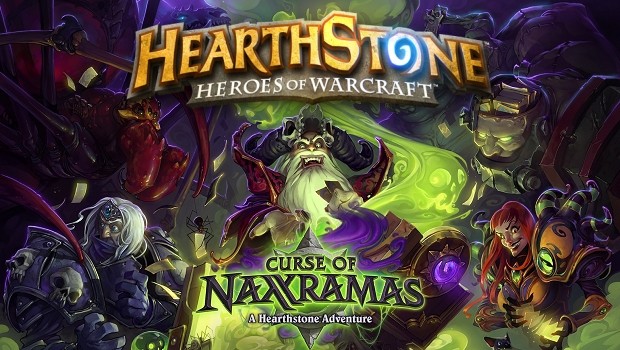
Curse of Naxxramas Review


As I mentioned last time, I anticipate that I will be posting more about Hearthstone in this blog from time to time. Today, I want to post my thoughts about the Curse of Naxxramas Adventure.

For those of you unfamiliar with this expansion, Naxxramas is much more than simply a new set of cards for the game. True, it does add 30 new cards to the game, including one for each of the heroes. But instead of simply allowing you to buy booster packs or some such mechanic, instead the player must earn them by completing a series of AI battles and special class challenges themed around the Naxxramas dungeon raid from World of Warcraft. Additionally, the expansion is being released over a five week period, with players needing to purchase each week's worth of content separately (or all at once at a discount, although this does not gain you access to the content any faster).

In keeping with the 'free-to-play' concept, this expansion can be paid for either by cash or by the in-game gold currency. Each week's content, referred to as a wing, costs 700 gold or $7.00 (which means about $35.00 for the whole expansion, which is a fairly typical price for a video game expansion). On average, a decent player should be able to easily earn 350-400 gold a week just from daily quests, making this price fairly accessible even to a relatively new player. In fact, I ended up easily saving enough gold over the month prior to its release to be able to pay for the whole expansion with gold.

While some have complained about having to complete the various AI battles to receive the new cards, I enjoyed the new challenges quite a bit. While the first week's content was fairly easy to beat, the difficulty seems to be ramping up over time, although still nothing that someone with a decent collection of cards won't be able to overcome. The AI can seem fairly random at times, and even makes some pretty subpar play choices, but the various challenges give enough advantage to the AI that you at least have to work at it. Additionally, the specific hero challenges are each tied to a preconstructed deck, which makes for a nice change of pace. And finally, if the battles seem too simple, one can also try them on heroic difficulty, which makes them considerably harder.

The cards themselves range from mediocre to quite good, and several are seeing widespread play among the game's top players. While none of them have inspired any new deck archetypes as far as I know, they have changed up the metagame significantly, and given additional options to all the popular archetypes. In keeping with the theme, many of the new cards revolve around the Deathrattle mechanic, which triggers whenever a minion with that keyword dies. The new cards are interesting, unique, but certainly not broken.

Finally, the expansion matches the high production values of Hearthstone. The challenges do a great job of bringing the Naxxramas concept to life, especially the creepy background in which they are played. It also fits in with Hearthstone's humorous tone, particularly the antics of Kel'Thuzad, who mocks you, threatens you, complains when you win, and even intervenes when you try to 'cheese' your way to victory.

Curse of Naxxramas is an excellent expansion to Hearthstone, and one that I recommend wholeheartedly and without reservation.

Thursday, August 7, 2014

More Hearthstone

Over the past couple months as I've blogged and Tweeted about Hearthstone, I've noticed a small but significant uptick in the number of people commenting about the game. Couple this with the fact that I am playing the game just about every day now (even if it's just the 15-20 minutes needed to complete my daily quest), and you should expect to see more posts about this great game in the future. But don't worry! I will continue to be a major advocate for Standard Pauper via Magic Online, and bringing you a steady stream of content just as I have been doing for the past two years.

But for today, I wanted to point my readers to two great Hearthstone resources:
  1. IHEARTHU.com, one of the major Hearthstone content websites, today posted a podcast interview with Ben Brode, the Senior Game Designer for Hearthstone. He spends most of an hour talking about the recent Naxxramas expansion and gives some great teasers for what we can expect in the future. If you're at all interested in the design and development of this game, the interview is highly recommended.
  2. Chris Barna, a Pro-Tour caliber Magic the Gathering player is a recent "convert" to Hearthstone, and maintains an excellent blog entitled The CCG Corner about the game that he updates every Thursday. His post about his journey into Hearthstone is also particularly worth reading, since it in many ways mirrors my own.
Next time, I will post my review for the Naxxramas expansion for Hearthstone. See you then!

Tuesday, August 5, 2014

Where Are the Replays on MTGO Version 4?

So here we are, several weeks past the release of the new client, and Magic Online goes on. If you didn't cash out after the transition, you're probably starting to get used to the new client. Sure, there are things that I wish were better. But overall the experience hasn't been nearly as bad as some predicted. In fact, the new client is a noticeable improvement in several areas. To that end, if you haven't read it already, I highly recommend Kumagoro42's recent article over on PureMTGO regarding the new client.

In any case, one of the features that I thought we had lost was the ability to view replays. If you recall, the previous version was notorious for losing replays, leading me to blog about a special method of retrieving them by writing down the game number(s) in question and then manually editing data files

As it turns out, replays are still available. They have just been buried in a strange sub-menu. Even better, the new client seems to be doing a much better job of capturing replays; indeed, as far as I can tell, I haven't lost a single one since the transition. So today I put together a quick video showing exactly how to get to them. Check it out below.


Thanks for watching!

Saturday, August 2, 2014

Magic 2015 Prerelease

For the first time since Scars of Mirrodin, I actually played in a Prerelease.

Now, this is not something I would recommend. You end up paying a premium to participate in these events. And unlike in paper, there's not the same experience of playing with these new cards for the first time, since there's typically at least a three week gap between a set's release in paper and the release on Magic Online.

This time, of course, participation was free, courtesy of Wizards of the Coast as their way of saying thanks for putting up with the transition to the new version of the client. You can't beat free, and so I happily jump into the Casual Sealed queue not long after they were available.

Having heard that White tokens looked to be a thing in M15 Limited, I selected White for my "Hunt." Here's the pool I opened:


Not surprisingly, my White was quite solid, with a nice combination of creatures and removal, including the excellent Triplicate Spirits, two copies of Raise the Alarm, Constricting Sliver, and even the excellent Spirit Bonds and Paragon of New Dawns, both of which have amazing synergy with a token strategy. Sadly, none of the other colors were particularly deep. The inclusion of two Caves of Kolos made playing Black an appealing choice, but with the exception of two Flesh to Dust, there was little reason to do so. I ended up playing Red as my secondary color, primarily due to getting three copies of Lightning Strike. Here's the deck I submitted:


I wasn't thrilled about playing the Bronze Sable, Hammerhand, or Forge Devil, but I felt like they were the best of my available options. Hot Soup ended up being quite powerful, even when just equipped on a simple beater like Goblin Roughrider. I also considered including Resolute Archangel, but decided that seven mana was simply too much for what this deck was trying to do.

I ended up finishing 3-1, and sold the rares for another 7 tickets, so overall I was very happy with how I did in the prerelease.

So what did you think of my build? How did your own prerelease experience go? Let me know in the comments below. Thanks for reading.

Friday, August 1, 2014

Card Legality Bug for Standard Pauper

It's funny how the past seems to repeat itself.

Back in the day, prior to receiving an official filter for Standard Pauper on Magic Online, one issue that came up from time to time was that certain cards would appear as legal for the format even though they weren't. You see, since Wizards often shifts certain cards from Common to Uncommon, particularly in Core Sets, you end up with cards that were Common in a previous set but are now only Uncommons in the current Standard set. In fact, this was such an issue that I created a video detailing exactly how to use the old client to determine whether or not a card was Standard Pauper legal. Fortunately, with the creation of the Standard Pauper filter, this ceased to be a problem.

At least, until the new client came out.

Currently, if you use the Collection tab to only view cards that are Standard Pauper legal, Uncommons that were previously printed as Commons once again show up in the viewer. However, should you try to actually play a game with a decklist that includes those cards, you get the following error message:

"Sorry, we were unable to join you to this event. Please try again later. This is not a legal deck. Internal deck code: DECKY"

Sadly, there is no way to actually display which cards are causing the error. For reference, these are all of the offending cards:
  1. Accorder's Shield
  2. Arrest
  3. Congregate
  4. Corrupt
  5. Darksteel Citadel
  6. Darksteel Ingot
  7. Doom Blade
  8. Eternity Snare
  9. Frenzied Tilling
  10. Gather Courage
  11. Gravedigger
  12. Heat Ray
  13. Reprisal
  14. Riddle of Lightning
  15. Shimmering Grotto
  16. Spell Blast
  17. Springleaf Drum
  18. Stab Wound
  19. Syncopate
  20. Tormod's Crypt 
While Wizards of the Coast is aware of this bug, I would encourage all my readers to report it if you haven't done so already. Here's how to do that:

1. Go to http://wizards.custhelp.com/app/ask
2. Log in using your Wizards community account name
3. Under the Products pull down menu, select "Magic: The Gathering"
4. Expand "Magic: The Gathering Online"
5. Expand "Magic reimbursement / Report a bug;" be sure and enter "0" as the event number. 


Hopefully this bug will get fixed soon. But the best way to make sure that happens is if we keep bugging them about it until they do so!